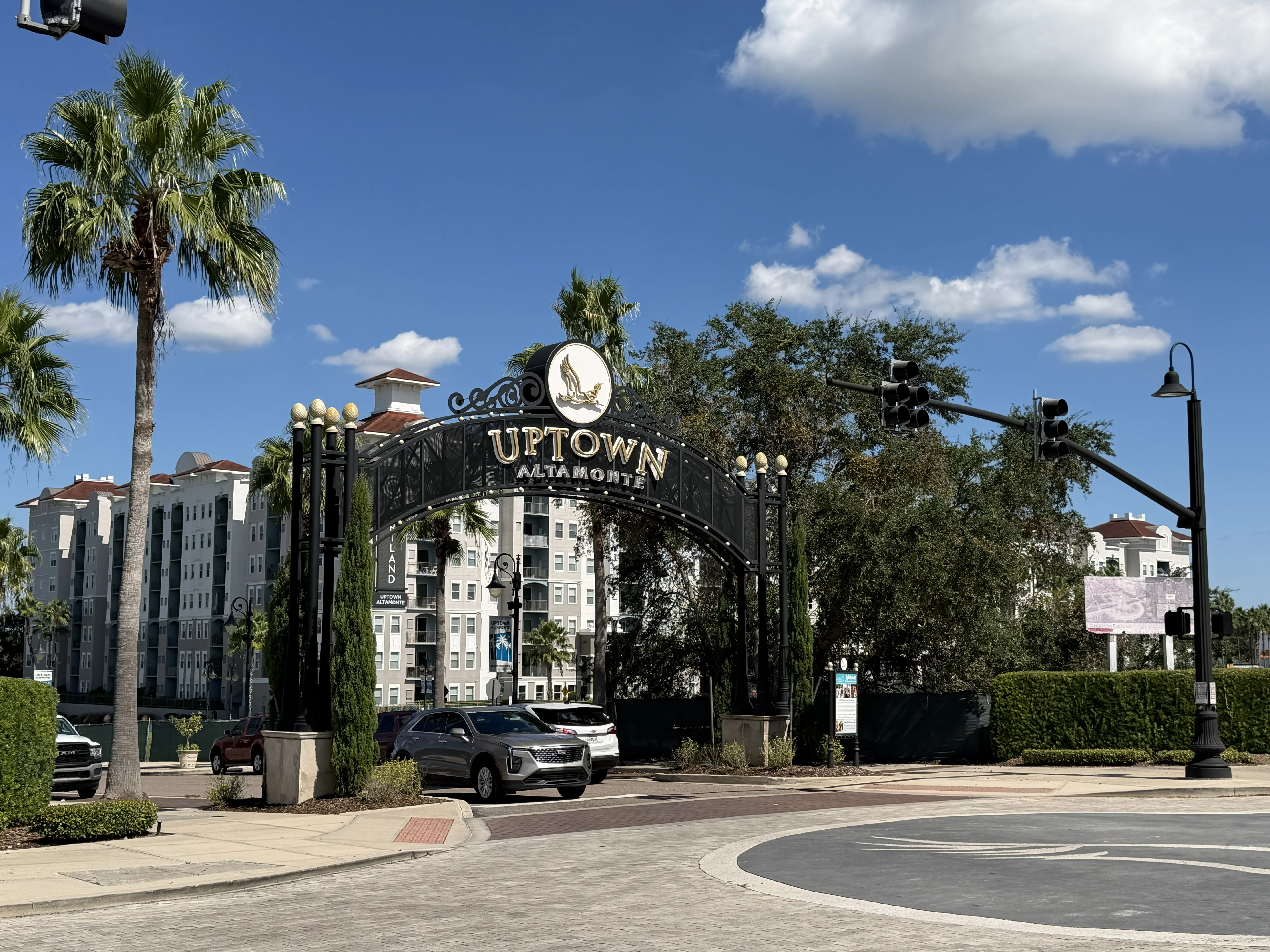
Maitland is one of the older suburban office submarkets north of Orlando, and that maturity is an advantage for exchange scheduling: rent rolls, tenant history, and comparable sales are easier to document here than in a market still absorbing new construction. The identification work is less about verifying whether a building is stabilized and more about lining up the closing calendar so nothing sits idle between the relinquished-property sale and the replacement purchase. That said, a mature submarket can still stall a closing if a long-tenured seller is slow to produce documentation, so the schedule should assume that risk from the start rather than discover it midway through the window.
An Established Office and Insurance-Sector Base
Maitland Center, off the I-4 interchange, carries a mix of Class A and Class B suburban office buildings, several occupied by long-tenured insurance and financial services tenants. Around Lake Lily and the older downtown core, smaller professional office and medical suites serve local practices rather than regional employers.
Multifamily product ranges from older garden-style communities to a smaller number of newer buildings, and a modest band of neighborhood retail and service space fills out the mix along the main corridors.
Maitland Boulevard, US 17-92, and the I-4 Interchange
Maitland Boulevard and the I-4 interchange carry the office traffic, while US 17-92 links Maitland south into Winter Park and north into Altamonte Springs. Because the submarket sits between two larger neighbors, comparable sales searches often need to pull from both directions rather than treating Maitland as a self-contained pricing pool.
Sequencing an Exchange in a Stable Submarket
A Maitland exchange benefits from a search that moves fast precisely because the underlying data is easier to trust. A dependable sequence looks like this:
- Pull five years of comparable office and multifamily sales rather than relying on current listings alone
- Confirm tenant lease terms and any pending renewals for insurance or financial-sector occupants specifically
- Lock lender terms early since underwriting on stabilized suburban office tends to move quickly once documentation is complete
- Coordinate title and qualified intermediary paperwork in parallel with lender review, not after it
- Keep a second Maitland or adjacent-submarket candidate identified in case the lead seller delays closing
Where Maitland Files Slip
The most frequent delay is not a documentation gap but a seller-side one: long-tenured owners in this submarket sometimes take longer to assemble closing documents than a fast-moving exchange schedule allows for. A second slippage point is treating a Maitland Center office building and a Lake Lily-area professional suite as directly comparable when their tenant profiles and lease structures differ enough to change underwriting. A third is assuming an insurance or financial-sector tenant's lease renewal is routine without confirming it in writing, since a single anchor tenant's decision can change a building's entire valuation.
Backup Path Between Two Established Neighbors
If a preferred Maitland candidate slows down, Winter Park and Altamonte Springs sit close enough, and share enough tenant overlap, to serve as a fast comparison set, with Orlando and Lake Mary useful for larger corporate office alternates. Each backup candidate still needs its own lease and title review before it moves onto the identification list; the value of staying in this corridor is faster access to comparable data, not a shortcut around diligence. A broker who has already pulled Maitland comparables can usually turn around a Winter Park or Altamonte Springs equivalent within a day or two, which matters once the window is already running.
Common 1031 Exchange Questions
Does an established submarket like Maitland make the 45-day identification window easier to manage?
It can, mainly because comparable sales and tenant history are usually well documented, which speeds up the diligence side of identification. The 45-day deadline itself does not change, so a faster documentation process should be used to build in a backup candidate rather than to relax the schedule.
How does a qualified intermediary handle a Maitland office building with a long-tenured tenant?
The intermediary's role stays the same regardless of tenant history: holding the exchange proceeds and preparing the required paperwork so the investor never takes control of the funds. Tenant lease review is a separate diligence step that should happen before the property is formally identified, not after.
What is boot, and how could it show up in a Maitland office-to-office exchange?
Boot is any cash or reduction in debt that an investor receives without reinvesting it into the replacement property, and it becomes taxable to the extent it exceeds gain deferral rules. A Maitland exchange where the replacement building carries a smaller loan than the relinquished property could create boot, which is worth reviewing with a tax advisor before closing.
Can a Maitland investor identify a backup property in Winter Park under the three-property rule?
Yes, up to three replacement properties can be identified regardless of value, which comfortably covers a primary Maitland candidate plus one or two nearby alternates. If more candidates are needed, the 200% rule allows additional identifications as long as their combined value stays within twice the relinquished property's sale price.
Does like-kind property have to be the same type of building in Maitland?
No. Like-kind for real estate is broad, so a Maitland office building can generally be exchanged for multifamily, retail, or other qualifying real property held for investment or business use. The classification still deserves a tax advisor's confirmation given the specifics of each property.