Lake Nona is still being built out around Medical City, and that changes how a 1031 exchange has to be sequenced. Buildings near the VA Medical Center, Nemours Children's Hospital, and the UCF College of Medicine can lease up faster than their operating history can prove out, which means a 45-day identification window has to lean on construction status and absorption data as much as on trailing rent rolls.
A Medical City Property Mix
Medical and life-science-adjacent office dominates the core around Lake Nona Boulevard, much of it built for research, clinical, or training tenants rather than general office use. Laureate Park and the surrounding neighborhoods carry newer garden and mid-rise apartment product, plus a growing band of neighborhood retail serving the residential base rather than airport or tourist traffic.
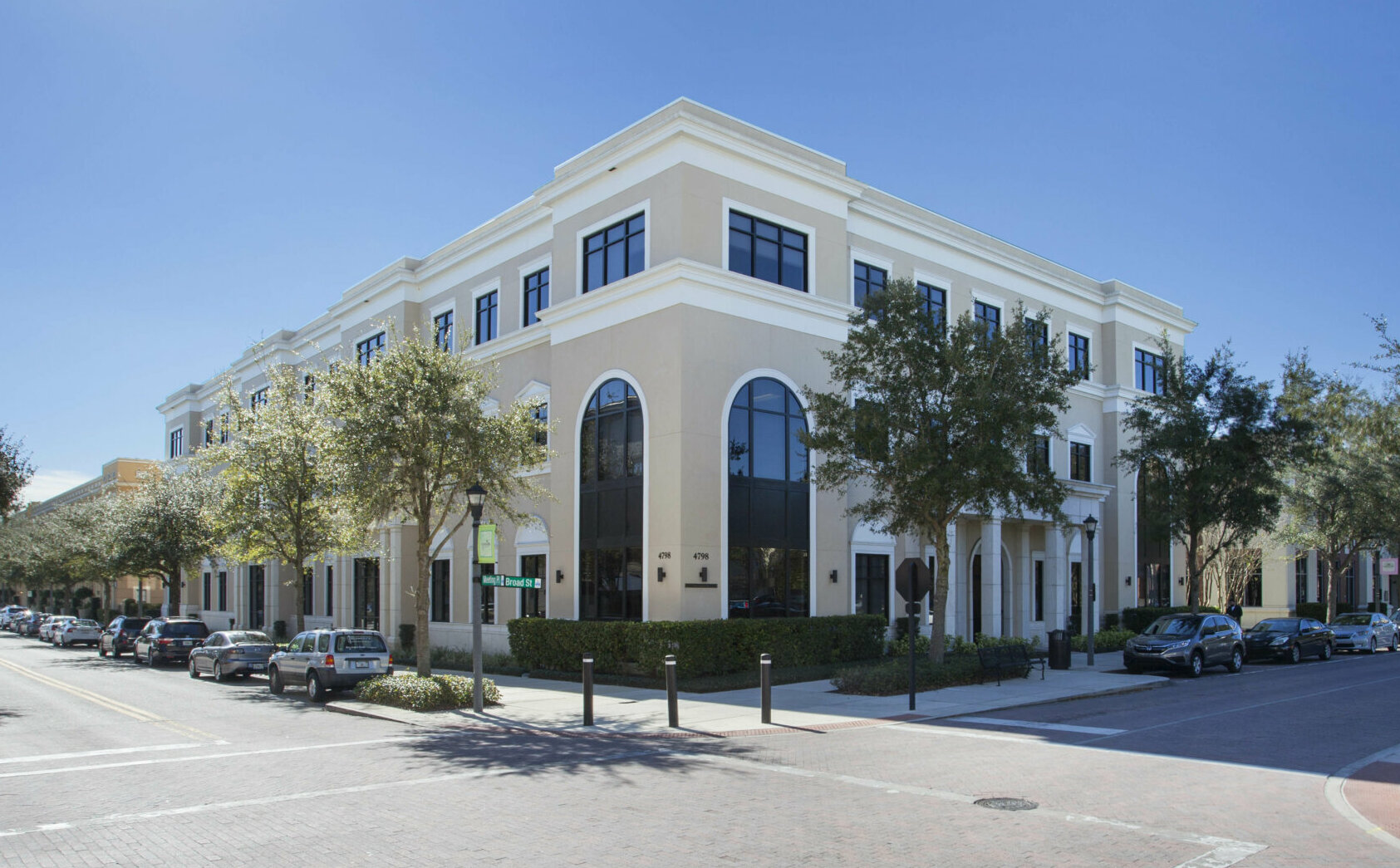
Professional office along the Town Center corridor tends to be newer construction with fewer renewal cycles behind it, so lease term and tenant improvement allowances matter more here than in an established submarket.
SR 417, Narcoossee Road, and Airport Access
SR 417 and Narcoossee Road carry most of the traffic between Lake Nona and the rest of the metro, and proximity to Orlando International Airport shapes demand for hospitality-adjacent and logistics-adjacent space along the western edge of the submarket. A replacement property search should treat airport-corridor parcels and Medical City clinical space as separate underwriting tracks, since financing terms and tenant profiles rarely overlap between the two.
Scheduling a Search in a Market Still Under Construction
Because so much Lake Nona product is new or newly stabilized, the identification sequence has to build in extra verification steps rather than skip them for speed:
- Confirm certificate of occupancy and final inspection status before treating a building as stabilized
- Request twelve months of trailing collections in addition to any pro forma rent roll for a recently delivered building
- Check whether tenant improvement allowances or free-rent periods are still being burned off inside current leases
- Verify lender comfort with newer construction before it becomes the lead identification candidate
- Keep a second, more established candidate identified in parallel in case appraisal or lending on the newer asset stalls
None of these steps take long individually, but skipping even one can push a lender's final approval past the point where a backup property could still close inside the 180-day period.
Where Lake Nona Files Slip
The most common delay comes from underwriting a pro forma rent roll as if it were a stabilized one, which can surface late in the lender's review and force a scramble for a backup property with less runway remaining. A second slippage point is assuming that airport-corridor demand automatically supports Medical City pricing; the two submarkets move on different drivers and should be evaluated separately even when they sit a few minutes apart. A third, less obvious slippage point is treating a signed letter of intent from a research or clinical tenant as equivalent to an executed, occupied lease, since financing terms can hinge on that distinction.
Backup Sequence If the Preferred Asset Stalls
When a Lake Nona candidate loses momentum, downtown Orlando, Kissimmee, and Oviedo offer the closest comparable pools with more established operating history, and Lake Mary provides an alternate for medical or corporate office specifically. Reusing diligence across those alternates only works if each one gets its own lease and financing check; treating them as interchangeable with the original Lake Nona candidate is how identification lists fall apart under deadline pressure.
Common 1031 Exchange Questions
Is a newly built Lake Nona medical building harder to identify inside the 45-day window?
It can be, mainly because lenders often want more documentation on absorption and collections for recently delivered space. Requesting certificate-of-occupancy status and trailing collections early, before the property is formally identified, keeps the window from being consumed by document requests.
How does the 180-day exchange period interact with a building still leasing up in Lake Nona?
The 180-day period runs regardless of a building's occupancy status, so a replacement property that is still filling vacancies has to close on the same calendar as a fully stabilized one. Investors should confirm a target closing date with the seller and lender well before the identification deadline rather than assuming extra time exists.
What is the role of the qualified intermediary in a Lake Nona exchange?
The qualified intermediary holds the sale proceeds from the relinquished property and prepares the exchange documents, keeping the investor from taking constructive receipt of the funds. That role does not change based on submarket, but the intermediary should be engaged before the relinquished property closes so timing is not lost to setup.
Can Lake Nona replacement property be combined with a Medical City improvement project?
An improvement exchange can apply construction or renovation costs toward the replacement property's value, but the improvements generally need to be substantially complete within the 180-day period. This is a detail worth confirming with a qualified intermediary and tax advisor before relying on it in the identification plan.
Does the three-property rule limit how many Lake Nona candidates can be identified?
An investor can identify up to three replacement properties of any value under that rule, which is often enough given how concentrated Medical City and Town Center product is. If more candidates are needed, the 200% rule allows additional properties as long as their combined value does not exceed twice the relinquished property's sale price.